
Guide: 9 Questions to Ask Any Countertop Software Vendor Before You Sign
2. What happens when something breaks or I have a question, and who actually picks up?
This is where the gap between vendors shows up fast. Ask them directly: Is there a phone number? A real person? What are the hours? What’s the typical response time? How many people are on the support team?
A chatbot and a help article are not customer support. When your templator is standing in front of a customer and the system won’t pull up a quote, you need a human being on the line, not a form to fill out.
Why it matters: The quality of support you get after the sale matters more than any feature in a demo.
3. Can you show how other fabricators use your software, and what problems it solves for them?
Anyone can put a logo wall on their website. Ask for actual case studies — named shops, with specifics: what they were struggling with before, what changed after they switched, and results you can measure, like time saved on quotes or fewer scheduling headaches. A vendor with real traction in the industry will have plenty of these to point to, and won’t hesitate to share them.
Why it matters: A named, detailed case study proves there are real shops behind the product, solving real problems.
4. What does your implementation and onboarding process actually look like?
Getting the software installed is the easy part. Getting your whole team using it correctly including your templators, your office staff, and your owner, that’s where most implementations fall apart.
Ask what the typical onboarding process looks like, how long it takes, and what kind of help you get during setup. Ask what happens after onboarding ends. Does someone check in? Is there ongoing training?
Why it matters: A great product with poor onboarding still leads to a failed implementation.
5. What’s your uptime track record and what happens during an outage?
Cloud software is only useful when it’s actually up. Ask the vendor what their uptime percentage has been over the past 12 months. Ask whether they have a public status page. Ask what happened the last time they had a significant outage and how customers were notified.
If they can’t answer this question clearly, it’s because they haven’t had to think much about it yet. That’s a risk you’d be taking on.
Why it matters: If your software goes down during template day, jobs stop. You need a vendor who takes reliability seriously.
6. How does your software integrate with QuickBooks and what other tools does it connect to?
Most fabrication shops run QuickBooks. Ask how the integration actually works: Is it one-way or two-way? Does it eliminate double-entry? What about other tools your team already uses?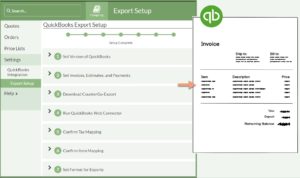
Also ask about integrations with slab scanners, inventory barcoding, or other tools if those are part of your workflow. The best software fits into your existing stack, it doesn’t force you to work around it.
Why it matters: Manual data entry between systems wastes time and creates errors. Good integrations make your whole operation tighter.
7. How often do you release updates and how do customers influence what gets built?
Software that isn’t actively improving is slowly falling behind. Ask the vendor how frequently they ship updates, how they decide what to build, and whether customers have any input into the roadmap.
A company with thousands of active fabricators is having constant conversations about real shop problems. That feedback loop shapes a better product over time. A company with a small install base is mostly guessing.
Why it matters: The software you buy today needs to still be the right tool two or three years from now.
8. What does pricing look like as my shop grows and are there any fees I should know about?
Get the full picture on pricing upfront. Ask what happens when you add users. Ask about setup fees, onboarding fees, integration fees, and annual versus monthly pricing. Ask whether pricing is transparent and publicly available, or whether it changes depending on who you talk to.
Surprises on a monthly invoice are no fun. A vendor confident in their value doesn’t hide the numbers.
Why it matters: The right software is an investment. You need to know exactly what you’re committing to.
9. Does this vendor specialize in countertop fabrication, or do they serve a wide range of industries?
Ask what percentage of their customers are countertop and stone fabricators. A vendor focused solely on fabricators lives in your workflow every day — templating, slabs, seams, install scheduling. One that spreads across many industries has to split its development time and pricing decisions across all of them, which usually means slower movement on fabricator-specific requests and less connection to what’s actually happening in your industry.
Why it matters: The software you buy should be built for your industry, not adapted to fit it. A vendor focused on fabricators has every incentive to keep your problems at the top of their roadmap.
The Bottom Line
A vendor that can answer all nine of these questions clearly and confidently, with real customers to back them up, has earned the right to be on your short list. One that hedges, deflects, or can’t point you to a track record of real shops running on their platform is asking you to be an early adopter. That might work out. But it’s a risk your business shouldn’t have to take.
Questions? Want to see how Moraware stacks up against these questions? Talk to our team. Checklist Here is a downloadable form that you can use as a checklist during your software evaluation: countertop shop software evaluation checklist |