8 phone calls to get (and keep) happy customers

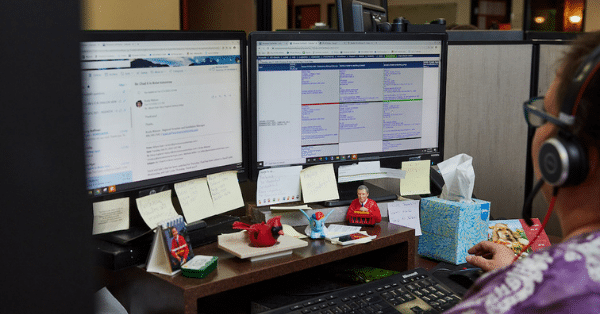
Romainian phone - we actually use newer technologyWe’ve found one reason people are happy with our software is that we keep in touch. Picking up the phone and checking in is one of the best ways to make sure we’re doing a good job.

But, just “checking in” or “touching base” isn’t very specific or useful, so we have a reason for every call.

For us, there are three distinct phases of calls – before you buy, getting started, and then our ongoing relationship.

Before you buy.

Over the years, we’ve learned how to have a sales process. It’s incredibly important to talk about what our customers need, show what our software does, and explain how to get started successfully. I’ve written a bit more about our sales process, here.

Getting Started.

It turns out that giving us a credit card for low monthly payments and a 90-day refund guarantee is actually pretty easy for lots of countertop fabricators. But, that’s when the work begins. For us, this is the most critical time in our relationship with our customers.

We need to make sure they’re getting value quickly and with as little pain as possible. So, we have a number of structured calls that we make.

  1. Training. We schedule short, daily calls with new customers for the first week. Even though we say this is “training”, it’s really a way to help our customers build the habits of logging in, adding new jobs, and scheduling their activities every day.
  2. Sales Follow-up. In addition to training, we have another type of call to double-check that we’re solving the business problems we identified before the sale. This involves making sure that you’re progressing on the training, getting the support you need, and eliminating the system you used for scheduling and managing jobs before you bought Moraware JobTracker.
  3. References. We want every one of our customers to be a reference, and we don’t consider a customer “sold” until they’re happy and willing to tell their friends about our software. This helps us focus on providing value, but it’s also a driver for our business. More than half of our new customers are the direct result of referrals.

The long-term relationship

How we think of the long term relationship with Moraware customersIt turns out that we’re in a long-term relationship with our customers. We keep providing them with a valuable service that helps them grow, reduce the time they waste, and adapt to the changing needs of the countertop industry.

In return we get money, but we also get more happy customers who help our business, suggestions for new features and products, and (I know it sounds cheesy) we’ve made personal bonds and friendships, too.

Just because someone is happy and willing to be a reference isn’t the end of the road in terms of calls. We still have reasons to call:

  1. New stuff. We’re adding new features to Moraware JobTracker, and building new products like RemnantSwap. We want to make sure that people know.
  2. Up-sell. We have multiple editions of our software, from just the bare-bones of scheduling to an enterprise solution that includes quotes, purchasing and inventory. If you originally said you wanted Enterprise, but started with Basic, we need to check in and see if those needs still make sense. Which means, we start with our sales process again.
  3. More training? Your employees might change, or maybe you need to solve new problems in your business that you hadn’t considered before. We need to offer to help, and a phone conversation is a great way.
  4. Make us better. Once a customer has been using our software successfully for 6 months or a year, they have deep insight into what we could do better. We like to ask the question “If there’s one thing you could change about Moraware, what would it be?”

So, that’s how and why we are obsessed with making phone calls to our customers. It seems ironic that in a time of electronic communication we spend so much time and effort on it, but there’s no substitute to talking to someone directly.

If you haven’t considered talking to your own customers after they buy from you, you should.

Want to know more? At Moraware, we make software for countertop fabricators. JobTracker is scheduling software that helps you eliminate the time you waste looking for job folders. RemnantSwap is a free place to buy and sell granite remnants with fabricators near you.

Why your spreadsheet sucks for scheduling

We’ve talked to hundreds of countertop shops that use Excel for scheduling. It’s a decent way to keep track of your templates, installs, and even stone fabrication. Usually fabricators move to spreadsheets when they’re sick of whiteboards and file folders, but even excel doesn’t fix everything in your schedule…

Yes, it’s vastly better than not using a computer at all, but it still has major problems when it comes to scheduling… problems that you probably never even considered.

  1. More than one user? Excel is okay when there’s a single person who’s in charge of the schedule. When two people need to make changes, it gets more difficult – you can’t even have lots of folks looking at the schedule at once without jumping through hoops.
  2. Too many columns? When you first start organizing your jobs with a spreadsheet you keep it simple – customer name, date, color, edge profile. But over time, something happens. You keep adding columns. Which truck are you using? Is it a solid surface or granite job? How many square feet? Eventually you run out of columns that you can look at and manage in a useful way.
  3. History? How would you know if your customer reschedules that install from Thursday to Friday? There’s not a good way to see when a job changed. And once there’s more than one person making the changes, it sure would be nice to know who is changing things, too.
  4. Pictures, CAD drawings, faxes? Excel is good for text, numbers, and drop-down lists, but countertop jobs have more detail that’s not easy to write down. If you have pictures, drawings, or other paper with a customer’s signature, how do you keep track of those and the details of the job?
  5. All job info in one place? If a customer calls and wants to know the status of their job, your spreadsheet doesn’t have all of the information. This means entering some details at least twice, and having the chance of an expensive mistake.

If you’re using a spreadsheet to manage your countertop shop, and you’re running into any of these problems – let us know, we can help.

Want to know more? At Moraware, we make software for countertop fabricators. JobTracker is scheduling software that helps you eliminate the time you waste looking for job folders. RemnantSwap is a free place to buy and sell granite remnants with fabricators near you.

Can you spot the email?

We’re trying to improve our communication with Moraware users, prospects, and even within our company. One of the ways that we reach people is by sending email newsletters with tips and news.

Here’s an hourly chart of traffic on our help site over the course of a few days. Can you spot when I sent the email newsletter?

So, there’s obviously an impact of sending out emails. That day we got about 3 times our normal traffic on the help pages, and that week was about double the average. But it’s not enough.

I’ve gotten specific requests from customers for more information, best practices, and how to use new features… and those same folks haven’t looked at the newsletters.

I’m guilty of the same thing – I get regular emails from other companies that I care about, but if I happen to be busy I mark it to “read later“. Now I’ve got over a thousand of those emails. So how do we make this better? I’ve got some ideas, all with pro’s and cons.

  • Real mailings, not just electronic. Pro: will sit on your desk for a while. Con: costs money for unknown effectiveness
  • More frequent email. Pro: more chance you get it when you’ve got time. Con: takes more effort, we don’t want to be spammers
  • Special offers, contests. Pro: probably increases engagement. Con: gimmicky, and might just attract folks who want free stuff.
  • More targeted emails. Pro: More relevance is more interesting. Con: More work, harder to manage (?)

Making sure we’re helping our customers and talking to our prospects is incredibly important to our business. My goal is to make sure we’re reaching every person who wants to hear from us, with the right information, at the right time… and the more we can automate the process, the better. I’ll keep you posted.

Want to know more? At Moraware, we make software for countertop fabrication shops. JobTracker is scheduling software that helps you eliminate the time you waste looking for job folders. RemnantSwap is a free place to buy and sell granite slab remnants with fabricators near you.

5 free things we did to improve our website

For years, we heard that we should make the Moraware.com website better… we were invisible on Google, and even countertop shops looking for scheduling and estimating software couldn’t find us easily. But, we finally changed what we were doing last fall. Here’s what we did.

WordPress.

We switched to WordPress for our entire website. In about a day, we went from a painful environment that only one person could use to a site that could be changed easily by multiple people. We’re also using the Genesis framework (actually that’s $60, not free) – which meant that we got all of the tools we needed to build a nice-looking website. Just a little bit of tweaking, and we’re really happy with the design and layout.

Page titles.

This was the simplest change we made, but it had a major impact on where our pages ranked in search results. Now, every one of the titles of our web pages is descriptive, and includes the keywords that are relevant to the page and our overall site. For example,

Before: Moraware – JobTracker
After: Countertop software – Moraware JobTracker

Blog.

There are 3 reasons we write on our blog: Communication with customers, search engine optimization, and thinking about our business. Even though it takes some time every week to write a post, it’s totally worth it.

I’ve found that it helps clarify the way we talk about our software and company. And, after writing hundreds of blog posts, our website can offer something valuable to our customers and prospects on a wide range of topics.

Analytics.

How do we know what’s worth it? By looking at the numbers. Google analytics is free, and it lets us figure out what’s working on our website and what’s not. You can see which pages are getting traffic, how much, and from where.

We also use a free Firefox plug-in called Rank Checker that lets us know where we rank for various keywords. We want to make sure that the customers who’re looking for us on the web can find us when they search for phrases like “software for countertop fabricators“.

Updated pages.

Before we made these updates, our website only got updated every few years. For example, we hired a designer to give us some prettier buttons in 2006, and that was the last time we really changed things. Now, we can keep improving the website in little steps, which is much easier and actually gets done.

Moraware website - before pic from 2009Moraware website - after pic from 2011

Once it’s easy to make changes on the website, it’s important to actually make updates. Every page we have can be clearer, more specific, and have examples. It’s a never-ending process.

Want to know more? At Moraware, we make software for countertop fabricators. JobTracker is scheduling and estimating software that helps you eliminate the time you waste looking for job folders. RemnantSwap is a place to buy and sell stone remnants with fabricators near you.

Moraware word cloud

I thought this was a really cool way to look at our website… I created a “word cloud” using a site called Wordle. Click on the pic below for the big version.

What strikes me is that we’re not talking enough about the problems we solve, instead we’re concentrating what we do and who it’s for. That’s not horrible, and I think the top keywords that pop up are fairly intentional. But, I want to see more about wasting time, making mistakes, and providing bad customer service.

Even my favorite example is hard to find in those words – “A homeowner calls and wants to make a change to the schedule. Your receptionist needs to put them on hold, get up from the desk, look for the job in 3 different places, and then interrupt other people, too. It’s a waste of your employees’ time and a painful experience for your customers.

Well, something to add to the “to-do” list: write more blog posts about why running your business with file folders and whiteboards is a bad idea.

Want to know more? At Moraware, we make software for countertop shops. JobTracker is scheduling software that helps you eliminate the time you waste looking for job folders. RemnantSwap is a place to buy and sell granite remnants with fabricators near you.

How a software conference helps countertop shops

In early June, Ted & I attended Microconf – a conference for people building and running small software companies. We had great conversations with the speakers and attendees who also own software businesses.

We shared experiences that will help our business and ultimately our customers. Here’s the top 5 things I learned.

  1. Your customers are smarter than you are. You should talk to them frequently, figure out what they want, and run your new ideas by them – early and often. We’re more systematic about our calls to customers and we’re about to send out our first-ever survey. We’re also working on a secret new project, which we’ve run by a few customers, even though not all of our employees know about it.
  2. Communication is really, really important. In the past we’ve been lax about posting on our blog, tweeting, and sending periodic emails. That’s a missed opportunity to remind people of why we’re here and what we do. If you’re one of our customers or prospects, you’ve probably gotten more contact from us in the last month than you remember in the past.
  3. Talk about the pain, not your product. To paraphrase Patrick McKenzie, nobody wakes up in the morning looking for scheduling software for countertop fabricators. We need to talk about our customers’ needs, it’s not about us. That’s already how we do our sales, and our website and other marketing is getting there, too.
  4. When the going gets tough, double-down. What’s the one thing that’s unique about us that makes people fanatically happy? In the past, we flirted with other markets. Now, we have a renewed conviction that we can be even awesome-er in our niche… building, selling, and supporting software for the countertop industry.
  5. Automate, outsource, edit. What are the key things that we do? What are the distractions? For me personally, I love talking to customers and participating in stone industry events, then writing about it. I’m going to keep trying to do more of what I love and outsource or eliminate the stuff I’m not good at (like “designing” yet another ugly trade-show banner).

So how does this help our customers?

I think the lessons I learned apply to most other businesses, including countertop fabricators. But more than that, if we can make Moraware more efficient, I’m convinced that it means more valuable updates and support for our customers. And, if we are better marketers, we can spread our software to even more granite shops… we know that we help our users waste less time on paperwork and mistakes, and it’s silly if others are missing out just because they never heard of us.

Being immersed in all of the conversations with peers really made a difference – it crystallized the thoughts we had before. So much of building a business feels like a black hole. It’s nice to have confirmation that talking to customers, writing valuable (hopefully!) content on a blog, and getting smarter about marketing is worthwhile. Thanks to Rob, Mike, all of the speakers, and to all of the new folks we met.

Want to know more? At Moraware, we make software for stone fabricators. JobTracker is scheduling software that helps you eliminate the time you waste looking for job folders. RemnantSwap is a free place to buy and sell granite remnants with fabricators near you.

Digital Stoneworking Expo

I attended the Digital Stoneworking Expo at Park Industries in St. Cloud, MN on June 9, 2011. The agenda included software, digital templating, and manufacturing countertops with CNC saws, waterjets and routers, and educating stone fabricators on the digital revolution that’s taking place now.

Park Industries Demo Shop

First, Joan Schatz, the COO of Park Industries, discussed “The Park Way”. The concept that really resonated with me was how they treat their customers – with the goal of turning each one into an advocate who actively promotes Park. With over 60 years experience of doing this with more than 3000 customers, they’ve really refined this process.

Software

Then, after a short introduction to the upcoming digital revolution from Dale Schleppenbach, I got to present. Talk about trial by fire… but it was really fun. I described how we sell software to granite fabricators.

  1. Why and how we do an in-depth “needs analysis
  2. What our software does, including a short demo
  3. Getting started with countertop software

Organizing a talk about it forced me to write down our system at a high level, and I’ll be writing about it in some future blog posts, too.

Jim Hoffman gave a short demonstration of the LT-55 digital templator. It’s fun to see in person – many of our users who also have digital templates never need their templaters to come into the office, so they can get more done every day.

Next, Matt Binsfield from Park and Bill Elliot of Slabsmith walked through a demonstration of the Pathfinder, which is a system that allows you to take pictures of individual stone slabs, and then impose those images onto CAD drawings to visualize the finished countertops. This is really sexy technology, especially for matching the veins in exotic granite.

Making the Decision

Then Mark Raby from Austin Countertops talked about their experience of starting a stone shop. Austin Countertops already had very successful cultured marble, laminate, and Corian production facilities, but they saw the dynamics of the market changing to natural stone and quartz.

They decided to start in May of 2010 with a big investment in technology – they purchased a sawjet, CNC router, and backsplash polisher. The equipment was delivered in August 2010. Now, with a staff of only 4 dedicated employees, they produce and install 2-3 kitchens per day. And, they still expect to keep getting more efficient as they learn more.

Mark’s company is really an awesome example of how adopting digital technology can allow fast growth in your business while keeping the number of employees involved small.

After lunch, we briefly heard from Joe Meyer at Pristine Full Circle water treatment – it’s crazy how important water quality is for all of these machines.

Then, there were demonstrations of the water-jet and CNC router. This was really cool; basically as we were going between the demonstration shop area and the lunch room where we saw the CAM software, a small countertop with sink cutouts, faucet holes, and range was being fabricated.

Understanding the Impact

Finally, Stuart Young from The Granite Shop described how he transformed his stone shop into a digital fabrication facility and has gotten amazing results.

Stuart Young from The Granite Shop in CalgaryBefore Stuart made the transition, he felt like he had lost control of his business, was producing work below his intended level of quality, and had a huge backlog of work that wasn’t getting done. As a consequence, his salespeople weren’t selling efficiently because they lost confidence in the company.

After changing to a completely digital workflow in 4 weeks, he now has control, even when he’s not there. In fact, on the day he was giving his talk, his company was moving the granite shop to a new location. During the course of the day, Stuart was calm and composed… and nobody called him with last-minute emergencies. He’s built a business that empowers his employees to make crucial decisions.

In addition to having control, there are some pretty astounding financial consequences, too.

  1. They doubled their production volume in the same facility with fewer workers.
  2. They increased the sq.ft per man hour, which is a key metric in their business.
  3. Labor rates went down because of a dramatic decrease in overtime pay.
  4. Stone material costs went down from 32% to 27%.

In addition, the transition to running a digital shop has allowed them to concentrate on the business, build a high profile within the industry, and positioned them for continued growth.

Thanks again to Stephanie and Dale for inviting me to the expo. I really learned a ton from the day, and I’m looking forward to the next one! I felt really lucky to be one of the speakers, and enjoyed the other presenters immensely, too.

Want to know more? At Moraware, we make software for stone fabricators. JobTracker is scheduling software that helps you eliminate the time you waste looking for job folders. RemnantSwap is a place to buy and sell granite remnants with fabricators near you.

Stone education marketing seminar – Denver

The world has changed. There’s the biggest recession since the Great Depression, record foreclosures, and the lowest number of housing sales in decades. And… technology has completely changed the relationship between countertop shops and their customers.

That was the basic message from Marty Gould of Focalize Consulting at the Stone Industry Education seminar held in Denver last week. You used to find a countertop fabricator from “word of mouth”, but now Marty explains how it’s “word of mouse”. Huh?

In the last 2 years, the internet has truly leveled the playing field for any business. Any small granite fabricator can build a website and look like their large competitors, but the biggest change: the customer is now in charge.

Homeowners won’t choose a countertop fabricators based on the clichés of being “family-owned”, “proud of their quality”, or “exceeding customer expectations”. Instead, they want to solve their specific problem. And, these days most of the research takes place on the web. What’s shocking is how few stone shops have invested any time into making their websites good… or even decent.

That led into the 2nd half of Marty’s presentation – which was both incredibly entertaining and uncomfortable. He went through several websites of the companies attending the seminar – and ripped them to shreds. The main problems on your website are probably:

  1. Difficult navigation – menus and headers liberally sprinkled around the page.
  2. Images with no text or tags – and important text should not be an image.
  3. Poor page titles and meta descriptions. Or none at all.
  4. Flash. Don’t make anybody wait for your crappy animation and music to load.
  5. No recent content. Is the site dead?

I really enjoyed Marty’s talk. It’s inexpensive to make your website much better than it is today. It takes some thinking about what makes you unique and how to say that in words that people will read. There are awesome free tools for creating a website, like wordpress or squarespace, so there’s no excuse for not having a site.

We’ve tried to apply this to our own business. Instead of being an incredibly flexible full enterprise solution for construction subcontractors (which we are) we really try to focus on the core of what makes us unique – scheduling for countertop fabricators. Once we honed our message to be specific and relevant, I think we dramatically improved the quality of our website and marketing message.

Want to know more? At Moraware, we make software for countertop fabricators. JobTracker is scheduling software that helps you eliminate the time you waste looking for job folders. RemnantSwap is a place to buy and sell granite remnants with fabricators near you.

Happy millionth countertop to JobTracker!


I was curious how many jobs had been scheduled through our servers. So I checked the numbers this afternoon. We have well over a million jobs, over a million quotes, and nearly 10 million scheduled activities.

If you’re curious, the median number of activities per job is 5.6. At the high end, some customers track an average of 15-20 activities per job.

I’m not sure what it all means, but it seemed like a milestone worth marking. Especially since the next logical step is 1 billion countertops. But that may take a while.

Here’s to the next 999 million!

Why should you attend industry events?

In case you don’t want to read the whole article, I’ll put the answer key right here at the top.
WRONG A) Buy a new machine from a vendor
WRONG B) Listen to a couple speakers and rush back to your office
RIGHT! C) Talk to your peers to generate new ideas for your business

When I think about the best business ideas I’ve had over the past 15 years, I remember distinctly where each of them happened. And not one happened while sitting in my office. I’m not referring to the incremental improvements we make every day or week. I mean those times when you change direction significantly. These are the events that dictate the course of your business for the next 6-12 months or more.

I often try to reproduce the experience by listening to podcasts, and reading books or blogs by people I admire. But it doesn’t have the same effect when I’m in my normal routine. When I’m away from the office, I tend to think about issues in a different light. I don’t know why this happens, because I’d be happy to have really good ideas all the time. But I think when I’m in my normal routine, I allow the constraints of the current situation too much influence. And I suspect that’s why I have a hard time coming up with truly novel ideas.

Another place I’ve tried to do some deep thinking is on vacation. I’ve read many a business book at the beach, and it’s never led to real inspiration. In fact my first day back at work after vacation looks a lot like my last day of vacation, except I’m wearing pants. That is not the same when I’m truly inspired with a new idea.

My best ideas have been generated when I am:

  1. Away from the office
  2. Not distracted by what’s happening at the office
  3. Talking to other people about my business or their business

I suspect my brain is thinking “Hey, maybe we never have to go back to the office if we come up with a new plan! Let’s get cracking!” Then somewhere along the way I get inspired with a new idea, and unfortunately for my brain, I run back to the office and start working on it.

Here is today’s tip for improving your business:

  1. Once a quarter attend some type of industry event. This can be broadly defined — maybe some events are specific to your industry (e.g. countertops), others are specific to your job function (e.g. sales or marketing).
  2. Don’t check back with the office during every break. You need to truly be away from the office for the day.
  3. At the event, you must talk to your peers! It took me a while to learn this. I wasted many opportunities because I sat in the room, listened to the speakers, then left. I got little benefit from those days. But the times where I took every opportunity to talk with the people around me, I had many valuable conversations.
  4. Invite the most interesting people you meet to have dinner afterwards. If you found someone whose brain you can mine for information, don’t let them get away! Buy them dinner and extract all the insight you can.

What events should you attend?

Other ways to do this are take one or two of your coworkers and just get away from the office and do something else. You should talk about work, but not the exact same conversations you have at the office. We’ve had great success doing this while walking in the woods in Oregon, hiking through a canyon in Georgia, and even boogie boarding in Florida.